Overview
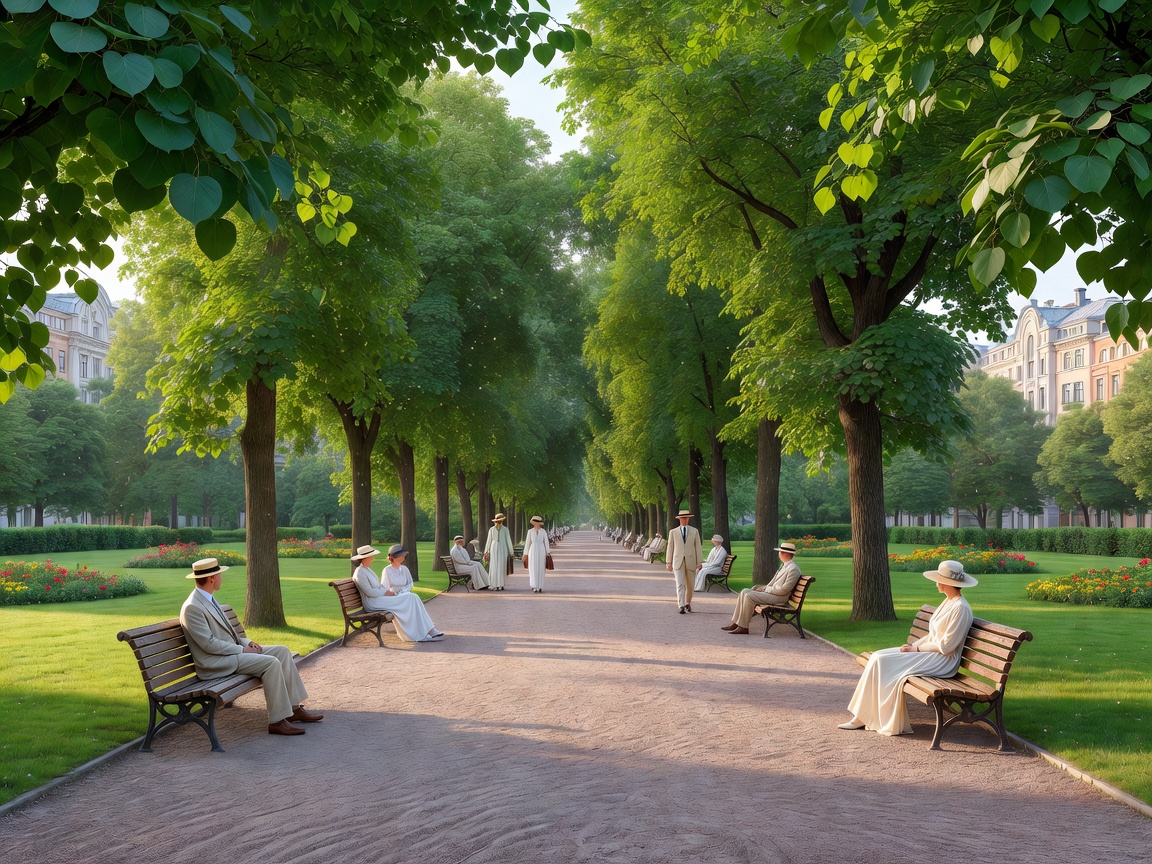
Esplanadi — almost always shortened to “Espa” by locals — is a long, narrow park running east to west through the heart of Helsinki. It is framed by two streets, Pohjoisesplanadi on the north side and Eteläesplanadi on the south. At its eastern end it opens toward the Market Square and the South Harbour; at its western end it reaches the Swedish Theatre near Mannerheimintie, the city’s main north–south artery.
The park took shape in the early 19th century, when the city centre was being replanned after Helsinki became the capital of the Grand Duchy of Finland. Today it works as a living room for the city: office workers eat lunch on the benches, visitors cut through on the way to the harbour, and on warm evenings the lawns fill with people who have simply come to sit in the long northern light. There are no gates, no opening hours and no admission charge.
What to see
- The Runeberg statue. Near the middle of the park stands the monument to Johan Ludvig Runeberg, Finland’s national poet, sculpted by his son Walter Runeberg. It is the park’s natural meeting point.
- The Espa Stage. An open-air stage in the park that hosts performances during the summer season. Many are free to watch from the lawns; programmes change every year, so check local listings.
- Kappeli. A 19th-century glass-and-iron restaurant pavilion at the eastern end. You do not need to buy anything to admire the building from outside.
- Havis Amanda. Just beyond the park’s eastern tip, at the edge of the Market Square, stands Ville Vallgren’s fountain sculpture, the focus of the city’s May Day eve celebrations.
- The streetscape. Both flanking streets are lined with late 19th- and early 20th-century buildings, design shops and cafés — window-shopping here costs nothing.
Seasonal information
Spring (April–May)
Lawns turn green and café terraces reopen. On 30 April, crowds gather around Havis Amanda for the Vappu eve celebrations, and the eastern end of the park becomes very busy.
Summer (June–August)
Peak season. Days are extremely long, the Espa Stage programme runs, and the benches are hard to find at lunchtime. Early mornings are the quietest time for photographs.
Autumn (September–November)
The tree-lined avenues turn gold and the crowds thin out. Expect rain and wet gravel; waterproof shoes help.
Winter (December–March)
Seasonal lights brighten central Helsinki from late November, and the park is atmospheric under snow. Daylight is short in December and paths can be icy even when cleared.
Accessibility
The park is flat, which makes it one of the easiest green spaces in Helsinki for wheelchair users, people with prams and anyone who prefers to avoid slopes. The central walkway is wide. Surfaces are a mix of paving and compacted gravel; gravel can be harder going after heavy rain, during the spring thaw or when snow has been partly cleared. Benches are frequent along the main axis. Trams run along the surrounding streets, and many of Helsinki’s trams are low-floor models — the HSL Journey Planner lets you check stop-level details. Toilet availability changes over time; nearby cafés, shopping centres and the Market Square area are the usual options.
Walking route: the Espa loop (about 1 km)
- Start at the Havis Amanda fountain by the Market Square.
- Walk west along the central walkway, past Kappeli and the Espa Stage.
- Pause at the Runeberg statue midway along the park.
- Continue to the Swedish Theatre at the western end.
- Return east along Pohjoisesplanadi’s shopfronts, then turn north up Unioninkatu to reach Senate Square and the Helsinki City Museum.
At an unhurried pace the loop takes around 20–30 minutes, longer if you stop for a performance.
Pros and cons
Pros
- Completely free and always open
- Flat and central, easy to combine with other sights
- Free summer performances
- Great for people-watching
Cons
- Busy and noisy in summer and on Vappu
- Traffic on both sides — not a quiet nature spot
- Café prices on the flanking streets can be high
- Gravel paths get muddy in thaw
How it compares
If you want sea air and space to spread out, Kaivopuisto is the better picnic choice. If you want forest and history, head to Seurasaari. Esplanadi wins on convenience: it is the one free green space you will almost certainly pass through anyway.